Understanding our cats isn’t always as simple as it seems.
They can be affectionate, expressive and full of personality, yet at the same time, incredibly skilled at hiding when something isn’t quite right. It’s part of their natural instinct, but it can make it much harder for us as owners to recognise when they may be in pain.
Often, the signs are subtle. A small change in behaviour, a shift in routine, or something that just feels a little different from usual.
In this expert guest blog, Alex Taylor, RVN, from International Cat Care (iCatCare) explores why cats mask pain, the behavioural signs to look out for, and how we can better understand what our cats may be trying to tell us.
Why are cats so good at hiding pain?
Like their wildcat ancestors, domestic cats are genetically programmed as self-sufficient survivalists, making them sensitive to threats around them. Cats are mid-level predators and are also prey animals, so will mask signs of pain as a survival strategy, as appearing vulnerable puts them at risk of being attacked by a larger predator.
How do I know if my cat is in pain?
Every cat is unique and will experience pain differently, but pain, especially if left untreated, can negatively impact a cat’s welfare. Pain isn’t just a sensory experience that a cat can physically feel, pain is also an unpleasant emotional experience too. You may hear veterinary professionals describing a cat in pain as being ‘painful’.
Cats are non-verbal and are good at masking signs of pain. They cannot tell us when they are painful, but we can look for the signs, which are usually displayed through changes in their behaviour. These may include:
Reduction in normal ‘cat’ behaviours:
Painful cats will spend less time or completely stop engaging in specific cat behaviours such as grooming, exploring (especially outside), jumping, climbing, hunting, playing or scratching on surfaces. When scratching reduces or stops, it’s common for cats to develop overgrown claws, an issue that typically occurs in cats with joint pain caused by issues such as osteoarthritis.
Hiding:
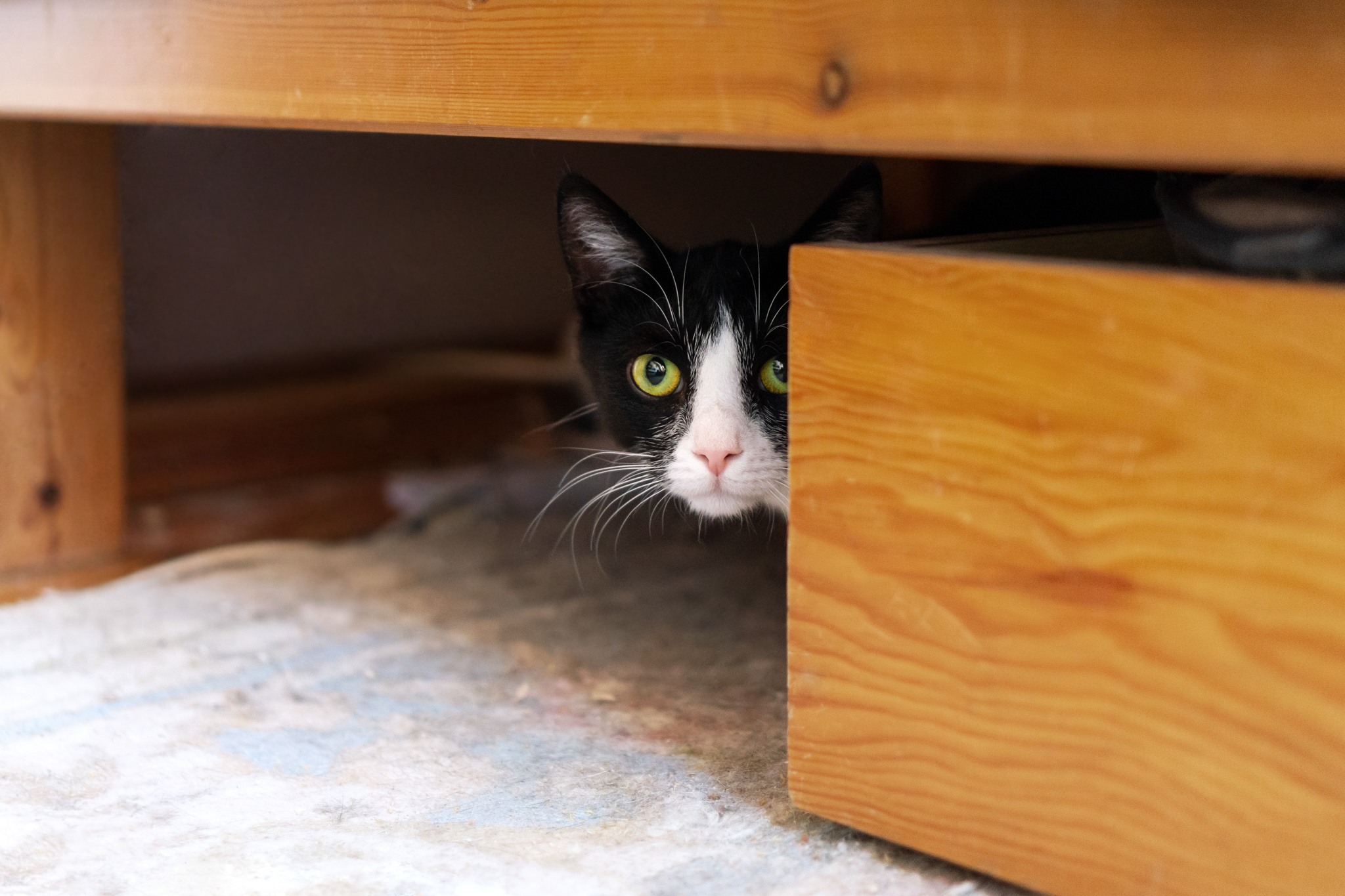
Becoming withdrawn and hiding is a typical feline response to pain – cats will do this to try and protect themselves, conserve energy and minimise the risk of experiencing any further pain (fig 1). They may hide in unusual places where they are partially or fully concealed and appear more sedentary than usual or even seem depressed.

Fig 1 – Painful cats may hide away in an attempt to protect themselves © Adobe Stock_543920722
Changes in mobility:
Cats experiencing pain (especially joint pain) may show gradual and subtle changes in their mobility. A cat may hesitate when climbing up or down from furniture or find it challenging to navigate the stairs, possibly avoiding them altogether. Affected cats may have a stiff gait when they walk and are less likely to engage in play.
Reduced interactions:
Affected cats may avoid interacting with their owners or other animals in the home. Cats who were previously social and enjoyed being stroked may choose to spend more time in areas away from their owners to avoid the pain associated with being touched.
Restlessness:
Although cats in pain are often less active, some may become restless. This tends to happen when a cat cannot get comfortable enough to rest properly, so will frequently get up and move around in an attempt to position themselves in a comfortable resting position.
Reduced appetite:
Painful cats may eat less frequently or not as much as usual, or they may stop eating altogether, especially if they have a fever or are feeling nauseous. Cats with dental pain will usually still eat, but subtle changes in eating habits such as eating on one side of the mouth, favouring soft food, dropping food, drooling, or pawing at the mouth are more reliable indicators of dental pain.
Reactive when approached or touched:
A cat in pain may growl or hiss when approached by people or other animals, as well as swipe or bite if they are touched. Cats respond this way to protect themselves by preventing interactions that may cause them further pain.
House soiling:
House soiling is the passing of urine or faeces outside the litter tray and/or in places that are unacceptable to the owner and is a common behavioural sign of pain in cats. In particular, cats with joint pain may find it difficult to climb in and out of their litter tray, making them more likely to house soil. Other health issues such as feline idiopathic cystitis and gastrointestinal disease are also linked with pain and may therefore cause house soiling behaviours in cats.
Body language of painful cats
Although changes in body language can be subtle, there are specific signs owners can look for (fig 2). These include:
- Body posture may be tense and hunched or crouched with the head positioned in line with or below the shoulder line.
- The cat’s ears are lowered and/or rotated, their eyes may be fully shut or squinting, whiskers strait and moving forward and their muzzle may be tense and elliptical shaped.
- Their tail may be wrapped closely along the side of their body
- Cats with limb pain may shift their weight from one side to another or sit in an awkward position.

Fig 2 – Body language and postures associated with pain in cats © International Cat Care.
Painful conditions in cats
Many health conditions can cause pain in cats including:
- Dental disease
- Osteoarthritis
- Urinary tract disease, eg, cystitis
- Gastrointestinal disease
- Pancreatitis
- Kidney disease
- Cancer
- Injuries, eg, cat bites, broken bones
- Post surgical pain
Assessing pain in cats
Owners and caregivers can assess their cat for pain at home and share findings with their vet, using easy-to-use tools, such as:
The iCatCare Cat Carer Guide to Managing Acute Pain is an expert-written resource to support caregivers to understand more about acute pain in cats.
The Feline Grimace Scale is a validated tool for assessing acute pain in cats. You can observe your cat and use a scoring system, to determine how painful your cat may be, with the total score being out of 10. The score at which a cat might require pain relief, called the ‘intervention score’ is a score of four or higher. Sharing your findings from the Feline Grimace Scale with your vet will help ensure your cat’s pain to be effectively managed. Visit the Feline Grimace Scale website or app for more information.
For cats that are experiencing chronic pain, there are simple checklists, such as the iCatCare Mobility Checklist which owners can complete before a veterinary appointment, to help inform the vet of any changes in the cat’s behaviour that may be linked with joint pain.
Talk to your vet
Although it can be challenging to recognise and assess pain in cats, the tips in this blog will help you spot the behavioural changes in your cat that could indicate pain. If you think your cat is experiencing pain, it’s best to contact your veterinary clinic and arrange a health assessment as soon as possible. If your cat is diagnosed with a painful condition, your veterinary team will develop a tailored plan to help you manage your cat’s pain, helping to keep them as comfortable as possible and improving their quality of life.
About International Cat Care (iCatCare)
A global cat welfare charity, iCatCare is dedicated to improving care for cats worldwide. Our pioneering, expert-led cat-friendly care programmes provide trusted education, advice, resources and support to everyone working, volunteering and caring for cats around the world, helping to drive positive change. The iCatCare vision is a world where every cat is understood and treated with compassion and respect.
International Cat Care, Registered charity no. 1117342 (England & Wales)
Leave a Reply