By Asha Clearwater
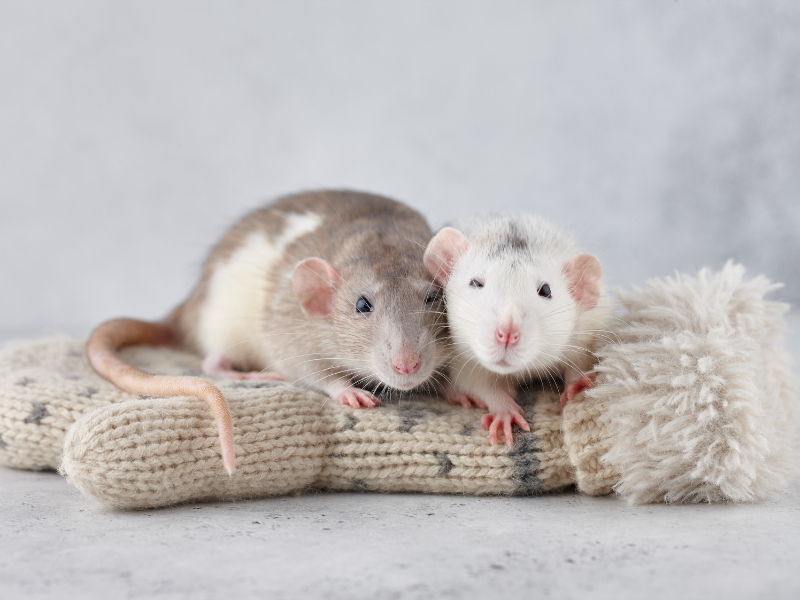
Today (4 April) is World Rat Day.
If you’ve been around National Pet Month for a while, you’ll know this isn’t the first time rats have been in the spotlight.
We think it’s important to keep talking about these amazing animals in a positive light, not only because they make incredible companions, but because many of us can still struggle with them.
So, why do these small creatures still get such a strong reaction?
For many people, that reaction comes from something they’ve always heard, rather than something they’ve experienced; urban myths have a lot to answer for!
Time for some myth busting. What people may expect and what they find when they spend time around rats could not be more different.
The RSPCA describes rats as “highly intelligent and sociable animals”, while the Blue Cross highlights just how interactive and curious they can be as pets – all qualities that come through pretty quickly when you meet them.
Rats love to approach you, investigate, respond to what’s happening around them, with some recognising routines and seeking out interaction.
While there’s a longstanding belief that rats are dirty, nothing could be further from the truth. These amazing little animals groom themselves regularly and, if their home is set up well, will maintain separate areas for sleeping and toileting. With the right enclosure and regular cleaning, they are no different to other small pets – it’s up to their human carer to ensure they are provided with a safe and clean environment.
When bringing these small animals into your home, it’s important to understand their needs.
Firstly, as rats are incredibly social animals, ideally, they should be kept with at least one other rat companion as they can struggle on their own.
The National Fancy Rat Society recommends large, well-designed enclosures with height, as rats are active and like to climb.
It’s also important to ensure they have plenty of interaction and enrichment to prevent boredom and support their natural behaviours.
When it comes to diet, they should always be fed food designed specifically for rats, rather than mixes intended for other species.
Keeping an eye on your rats’ health requires regular checks, as they are pretty good at masking health issues. They may hide signs of illness, so look out for small changes in behaviour or appetite, which can be early indicators that something’s wrong, and speak to your local vet for advice.
Even though we have more information available on these incredible animals today, familiar pets like cats and dogs may feel easier to understand, meaning that rats still sit outside that comfort zone for many of us.
Some perceptions are harder to shift than others and without personal experience, those negative associations can stick around for longer. It’s only when we spend time with rats that we discover just how affectionate and engaging they can be.
Many years ago, when I was in my late 20s, I met my friend’s pet rat. She was so excited to introduce me to her four-legged lodger, but when she asked if I’d like to hold him, I felt a shiver run down my spine. A rat! I’d heard all the negative stories about these little long-tailed ‘terrors’ – mainly from my dad, who’d encountered a few during his time repairing ship engines, and wasn’t the biggest fan. Dad’s tall tales (not tails) had had an immediate, negative impact, and so was instilled this limiting belief – that rats = trouble. It was a hard one to shake, which came back up to the surface with my friend’s invitation.
I can’t remember how many visits it took before I first plucked up the courage to meet Roland properly (rat names have been changed to protect identity 😉 ), but when I did, it was a brilliant experience. This dear little animal, with the most inquisitive and gentle nature, became one of my weekly highlights. He surprised me in so many ways, right from that first ‘cuddle’.
The big surprise came with his tail. It was longer than I expected, and to begin with, it was all I could focus on. I’m not surprised it tends to be the thing people often struggle with, but it’s important to remember it’s also one of the most practical parts of a rat. It felt smooth, but textured and warm all at the same time. Slightly weird, but wonderful. It was years later when I discovered that a rat’s tail acts a bit like a counterweight and helps stabilise them when they climb, turn or stretch. Another brilliant thing about the rat’s tail is that it helps regulate their body temperature. As they can’t sweat, rats rely on their ability to increase or decrease the blood flow in their tails to help them cool down or retain heat. How amazing is that?
Holding Roland and watching him explore his environment was a real joy. I’ll always remember that first time I held him in my hands, the way he checked me out – sniffing my hands, my clothing, then my hair. You could really see the cogs whirring as he tried to figure me out. And then, over time, the curious climbing up to my shoulder, whiskers twitching, eyes focused, until he found a comfortable spot to settle down, relaxed. It felt like I’d received a thorough rat MOT and I’d finally passed his gentle test.
I can’t remember exactly how long he was part of my life, but I do know I came to look forward to our regular meetings and that I shed more than a few tears when he died.
Owners of pet rats talk about routine, recognition, and small moments of interaction that build over time, and that was certainly my fabulous experience.
These experiences don’t always make it into wider conversations; perhaps that’s why the gap in perception can remain.
World Rat Day encourages us to look again at common assumptions and to recognise rats as intelligent, social animals.
My view on these beautiful creatures certainly shifted when I was introduced to Roland all those years ago.
Do you share your home with a rat? Have you ever spent time around rats, or had your perspective shift?
What made the difference for you? Share your stories, videos and pics with us. Tag us in on social using the hashtags #NPM26 #PetPawsitivity
For more information on rats as animal companions check out:
Leave a Reply